
LOG 01 · Opening loop
Exploration — Letting the Game Unfold Through Play
How can the first survival loop teach the world without a detached tutorial?
Start with a problem
The player wakes in darkness, without clothing, food, or a clear explanation. The first ten minutes use those immediate problems to introduce movement, environmental interaction, inventory, hunger, and the shelter’s day cycle.
The player is not asked to stop and learn a tutorial room. Finding a wrench or a meal is already a reason to move through the space.
Make power readable
Facility Energy is a visible constraint. The breaker panel turns an abstract number into a spatial decision: which room gets power now, and what will have to wait?
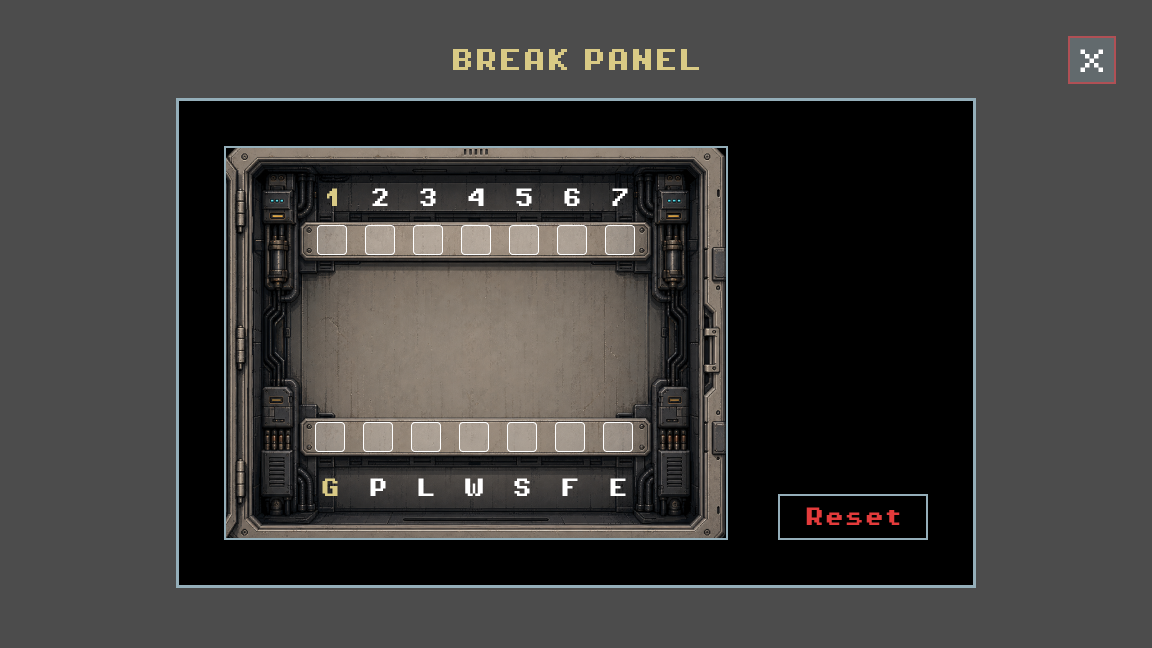
Design response: route one available source into one room, show the connected state, and let the powered result unlock the next meaningful action.
Repair is progression
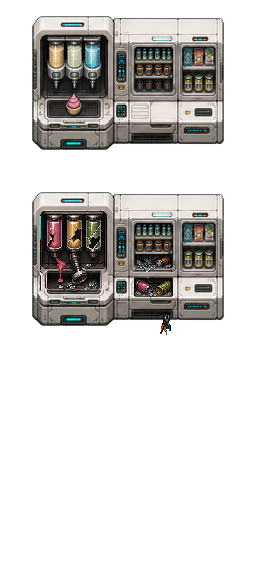
The first repair sequence connects blueprint, wrench, broken machine, and usable output. A food dispenser is not only an object to fix; it is the first proof that the shelter can become dependable again.

Leave room for choice
Day 1 supports different repair priorities rather than a single invisible checklist. That makes failure and alternative order part of the learning: the player discovers which systems can wait and which needs become urgent.
The result is an opening that teaches the rules while preserving the feeling of being alone in a damaged place.
What changed
By the end of the opening loop, the player can move with purpose, manage basic needs, read room power, use a blueprint, and look forward to Day 2 and the search for BB.
Evidence still needed: a clean runtime capture of the dark-to-powered Living Quarter and a breaker-routing clip using the same camera framing.