Learn the shelter through need.
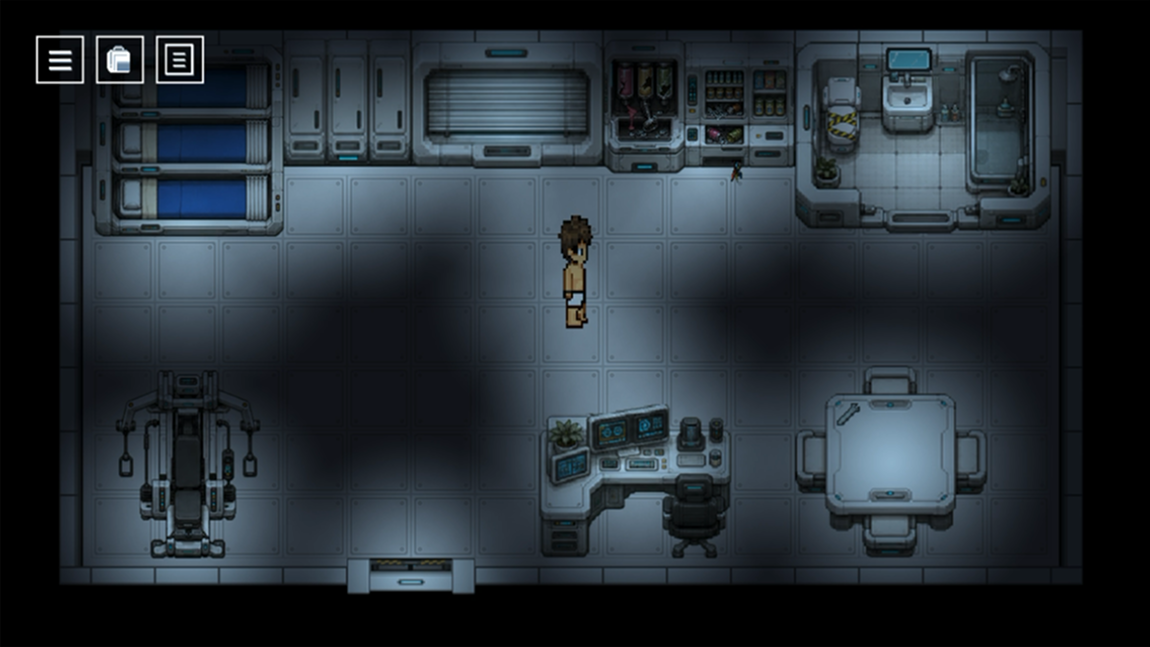
Movement, clothing, hunger, and the first repair make the unfamiliar room readable.

Game development log · The Last Shelter
A top-down pixel-art survival game built in Godot. The player wakes alone in a failing shelter, rebuilds its systems with an overconfident robot named BB, and eventually discovers the shelter is a damaged spaceship stranded near Earth.
View development logs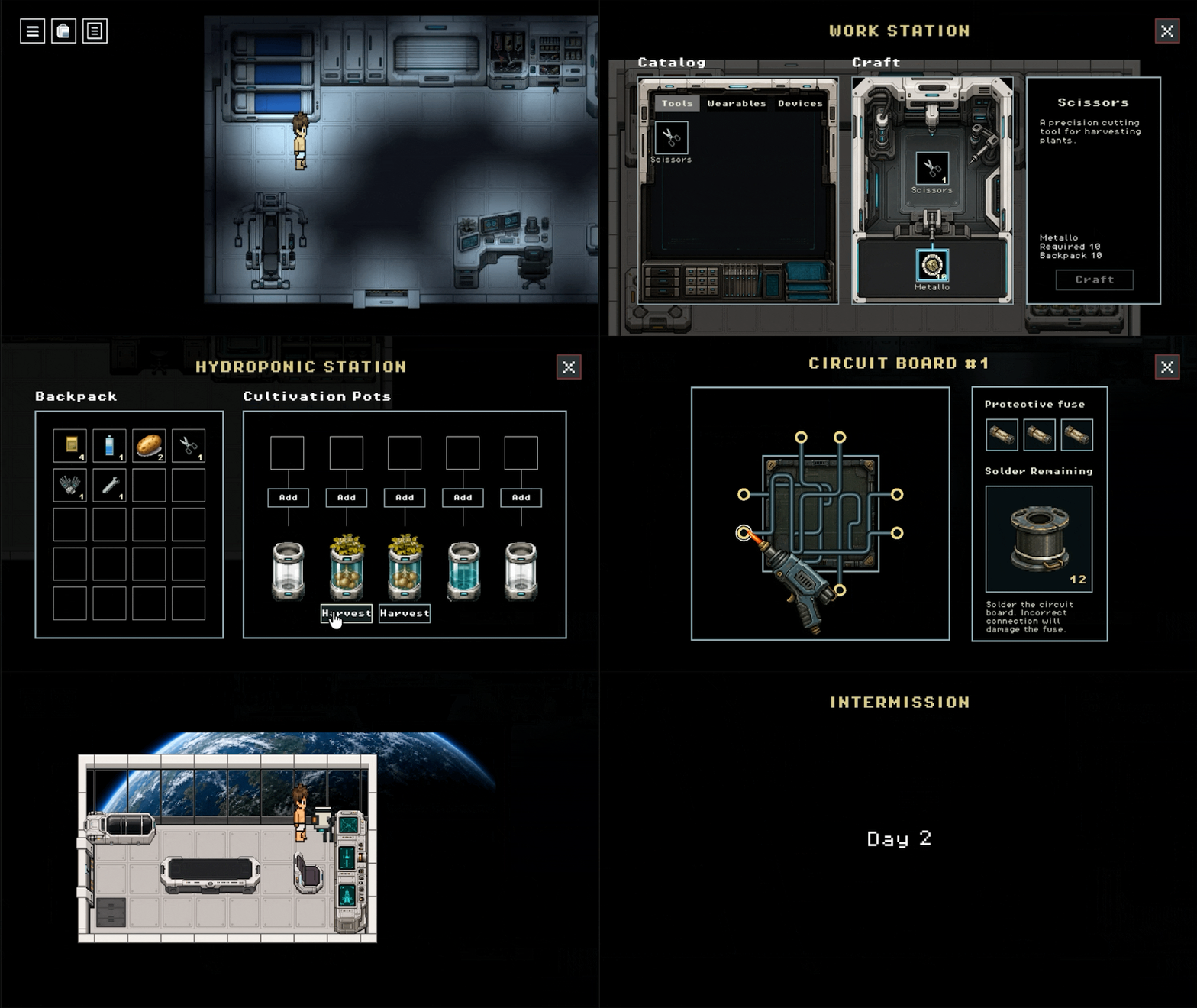
The player journey
The emotional arc moves from isolation to companionship, then from one dark room to outer space. Each beat is a playable system, not a detached story screen.
Movement, clothing, hunger, and the first repair make the unfamiliar room readable.
Power, machines, food, and BB’s trust turn survival into a connected route.
The Bridge opens to Earth and the shelter becomes part of a damaged ark ship.

Design pillars
The portfolio story is about the relationship between rules, writing, interface, and feeling—not only the pixel art on top.
Needs and repairs lead the player through the world, so onboarding happens inside a meaningful goal.
Finite resources, room power, crafting, and farming reinforce one another rather than becoming isolated minigames.
BB teaches, obstructs, rewards, and eventually upgrades the player’s diegetic HUD.
Four development chapters
Each chapter isolates one design question and shows how it changes what the player can understand, do, or feel.
How can the first survival loop teach the world without a detached tutorial?
Urgent needs turn movement, power, repair, and progression into one readable first-day route.
How can one NPC be character, progression gate, teacher, and interface designer?
BB makes the game’s systems feel personal: repairing the companion also changes what the player can understand and do.
How can repair, farming, crafting, and waste feel like one connected economy?
A finite material model makes the shelter feel alive while exposing the accounting questions that still need validation.
How can each completed system earn a payoff that expands the story, mechanics, and space?
The repair loop grows into an EVA, turning familiar routing rules into a physical journey with a permanent power reward.
Controlled spoiler
Let the overview earn its final reveal. The full Bridge context stays behind an intentional action.
The rooms you have been repairing are part of a damaged ark ship stranded near Earth.
Open Log 04: Expanding the Game