
LOG 02 · Chapter 2 · BB
Companion — Building an NPC With Real Personality
How can one NPC be character, progression gate, teacher, and interface designer?
Meet the locked door
BB begins as a suspicious presence behind a Workshop door. The player hears enough to want answers, but the door withholds the companion until repair becomes a real objective.
That delay creates anticipation before the sprite ever needs to explain itself.
Make personality playable
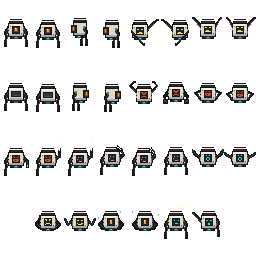
The reveal is theatrical: curtain, pose, embarrassment, and confetti. BB’s pompous confidence is expressed through timing and behavior as much as dialogue.
Evidence placeholder: use an approved 8–12 second one-shot with the final expression sequence, sound treatment, and confetti timing.
Turn repair into play
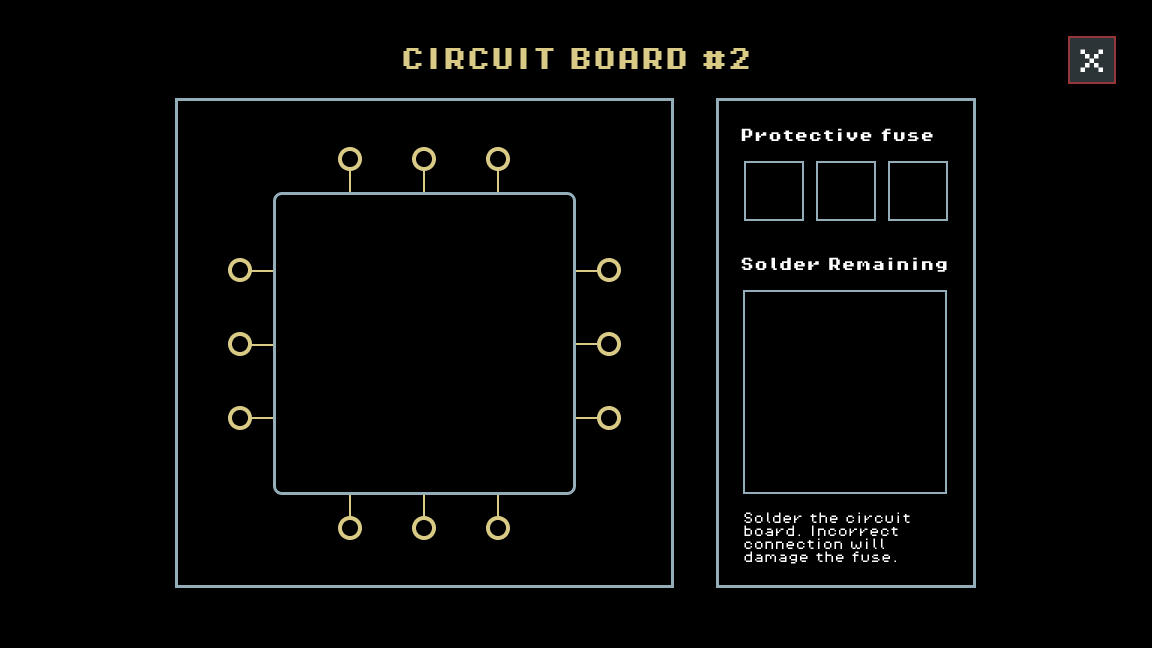
The circuit-board minigame traces overlapping cables, pairs solder points, and manages solder and fuses. Success physically restores the companion, so the player’s mechanical action has a human-shaped result.
Write two voices
BB is theatrical, defensive, and petty. The player is dry, suspicious, and practical. Their contrast makes exposition feel like a relationship rather than a manual.
Expression changes should sit beside the excerpt so visitors can see how voice, sprite, and interaction reinforce one another.
Put the UI in the fiction
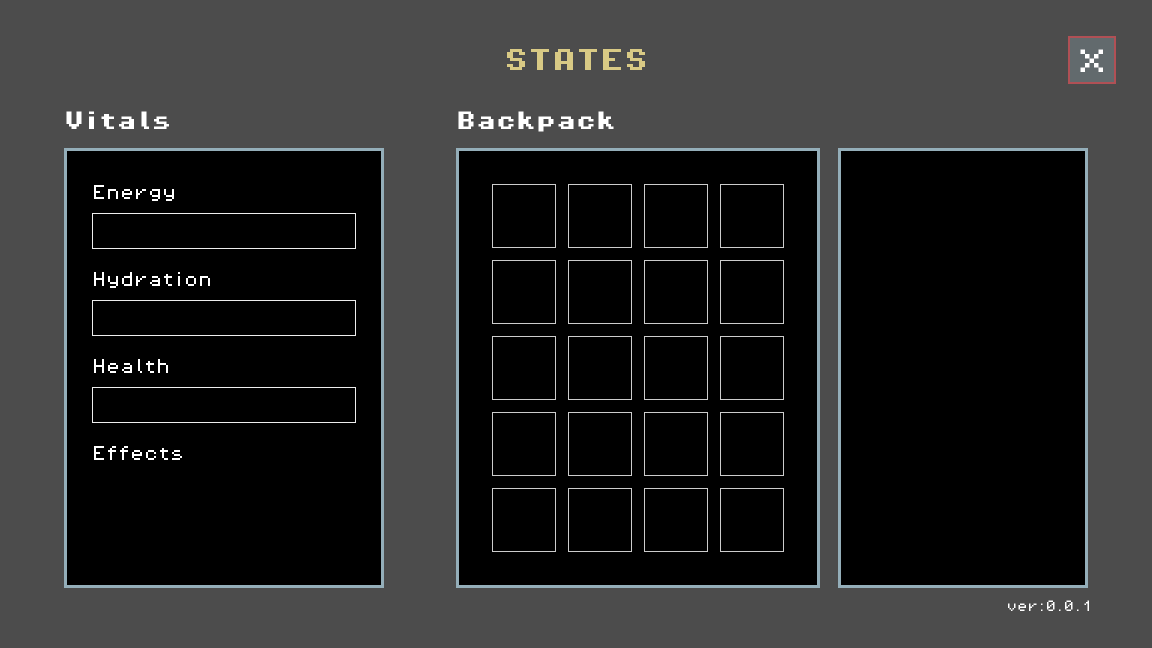
The HUD upgrade is diegetic: the interface exists through the player’s brain implant, and BB changes it inside the story. A suspicious loader that pauses at 99% can be both a joke and a character beat.
One character, many roles
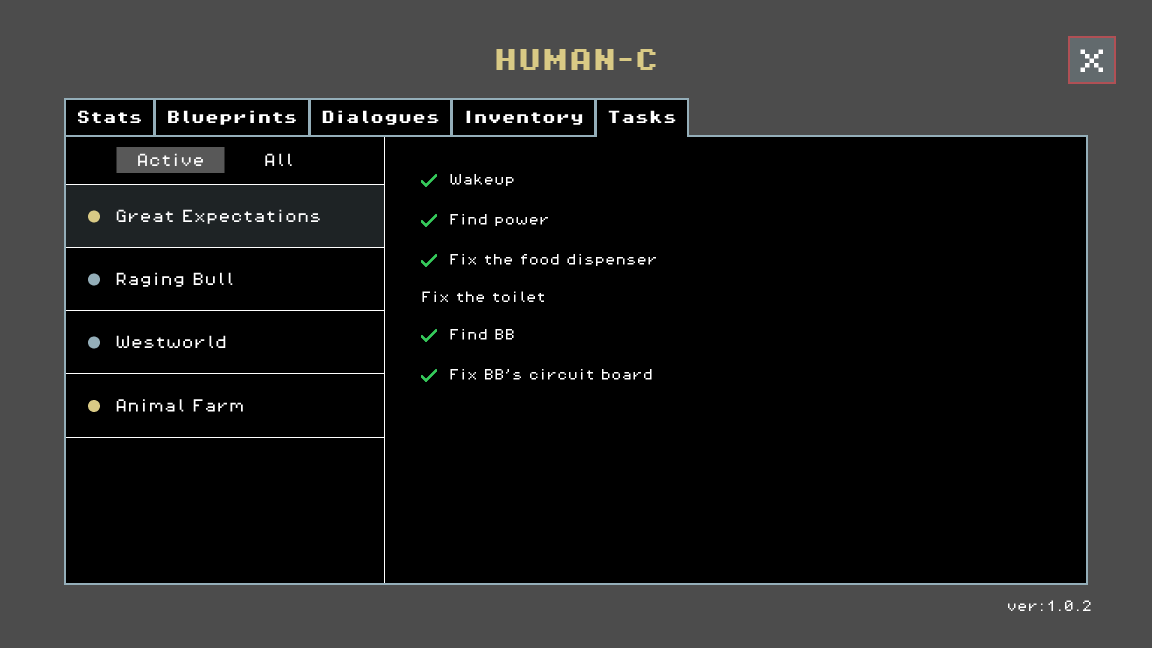
BB becomes guide, merchant, quest giver, companion, Credito gatekeeper, and unreliable authority. The character is memorable because every role changes what the player can do next.
Result: repairing BB repairs the relationship between narrative, progression, and interface.