
LOG 03 · Matter circulation
Nothing Is Waste — Building a Robust Resource System
How can repair, farming, crafting, and waste feel like one connected economy?
Start with a hypothesis
The shelter’s economy is designed around a fixed pool of finite matter. Metallo, Carbo, Hydro, Oxo, and Silico describe the material language; Electro and Credito behave differently from that pool.
The ambition is simple: repair, farming, crafting, waste, and power should feel like one living system rather than separate inventories.
Follow one potato
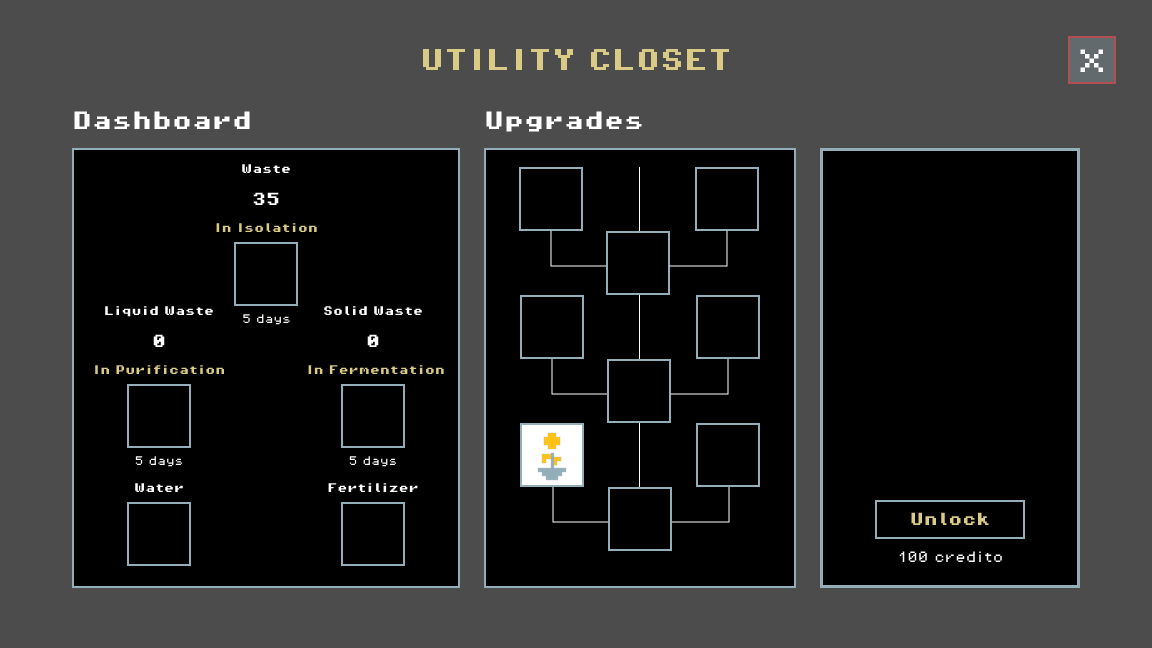
A potato makes the abstract model visible. Planting, growth, treatment, harvest, paste, consumption, waste, and processing are a chain the player can understand through repeated contact.

Make machines legible
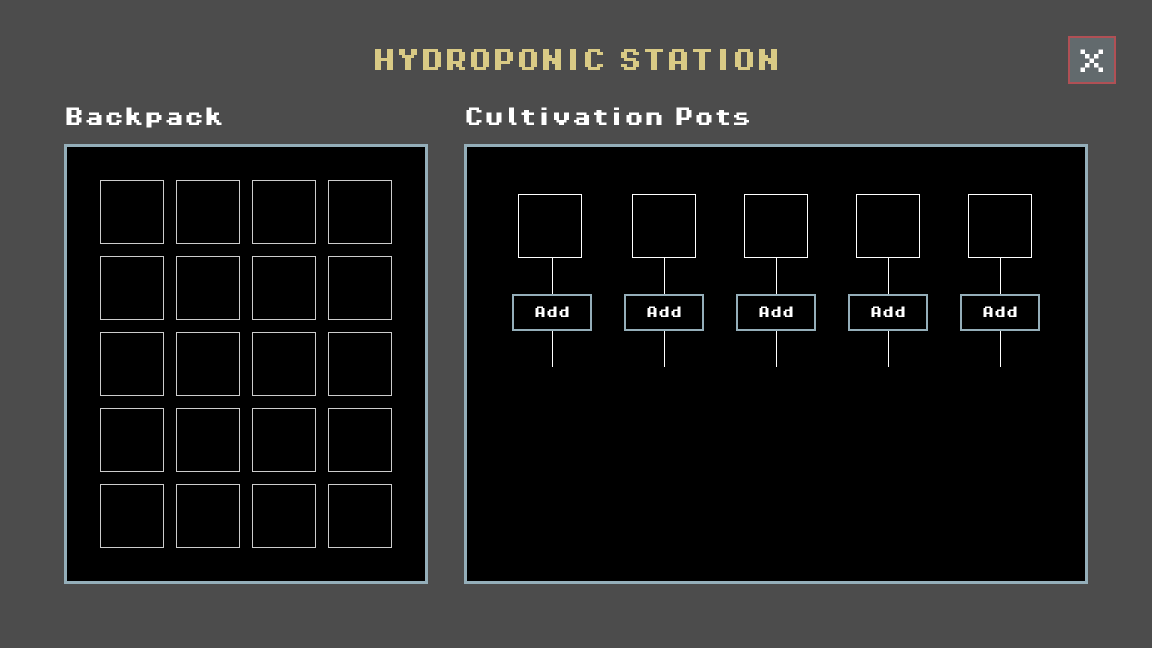
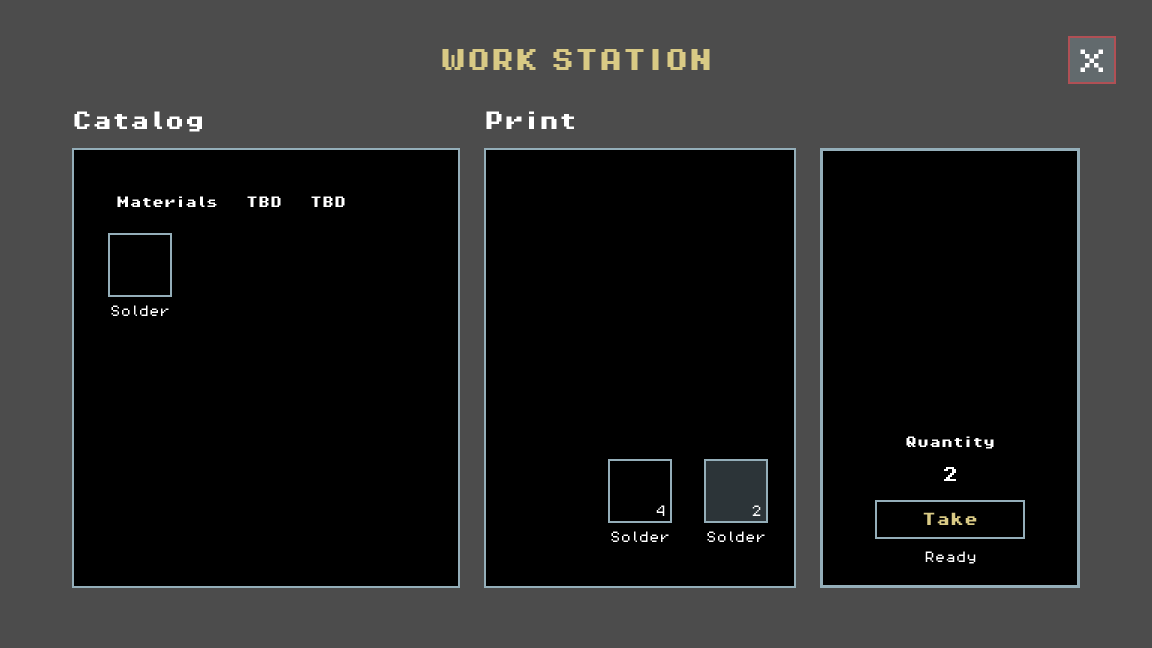
Hydroponics, the Utility Closet, the 3D printer, and the Work Station should expose inputs, outputs, time, and power requirements. The interface is part of the economy’s teaching language.
Where the model breaks
The current review surfaced unresolved questions around conservation, scale, and the difference between item counts and elemental units. A portfolio page should not turn that open question into a shipped-feature claim.
Known issue: the accounting model needs explicit units, visible losses or byproducts, and tests that can distinguish an item from the material it represents.
Design response
The next model should name its units, make recipes explicit, show where matter leaves or re-enters the loop, and pair balancing changes with telemetry. A retrospective diagram can explain the reasoning without pretending it was an early artifact.
What is true today
The strong claim is not that every unit is already conserved. It is that the game is using resource circulation as a design tool and that the accounting problem is now visible enough to improve.